Free Minecraft mods and clients are a malware entry point
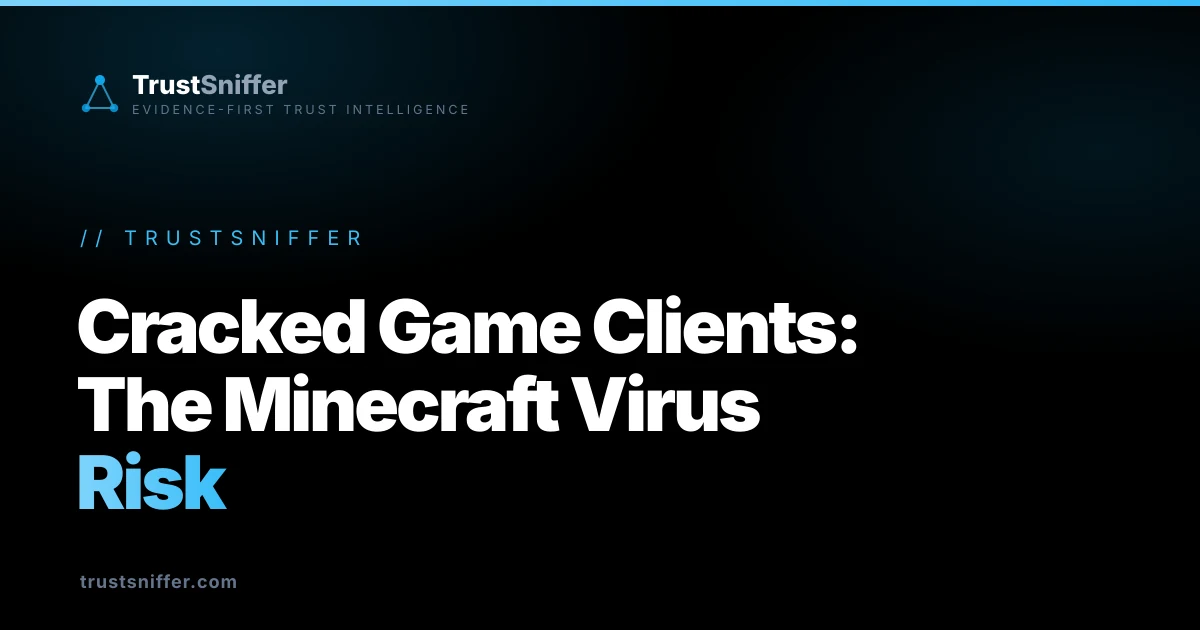
A cracked Minecraft client virus is malware packaged in a download that claims to be a pirated or modified game client, a premium mod pack, or a paid skin bundle offered for free. The download rarely does what it promises. Where the page offered features that normally cost money, the file runs code that installs something the player never asked for.
The appeal is simple. Official mod marketplaces, premium servers and cosmetic packs can cost money or require an account tied to a purchase, and a page offering the same content 'cracked' or 'unlocked' removes that barrier. That is why the lure keeps working in gaming communities in general, with Minecraft as one example among many.
What we found in 36 sites we analysed
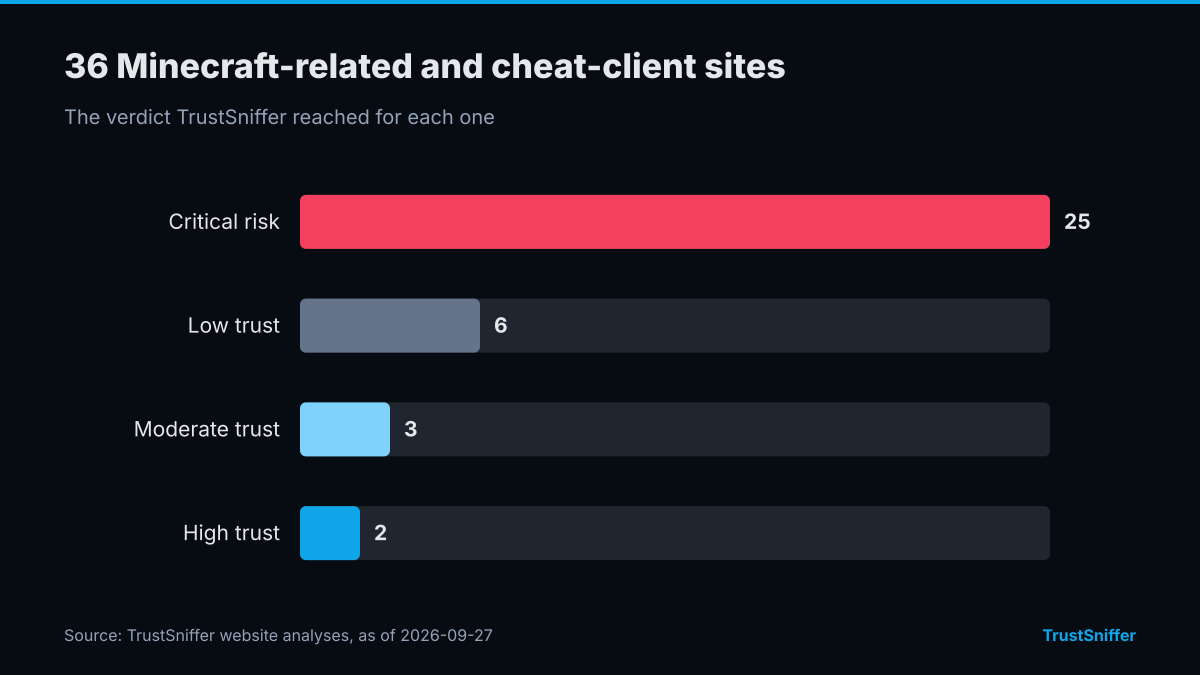
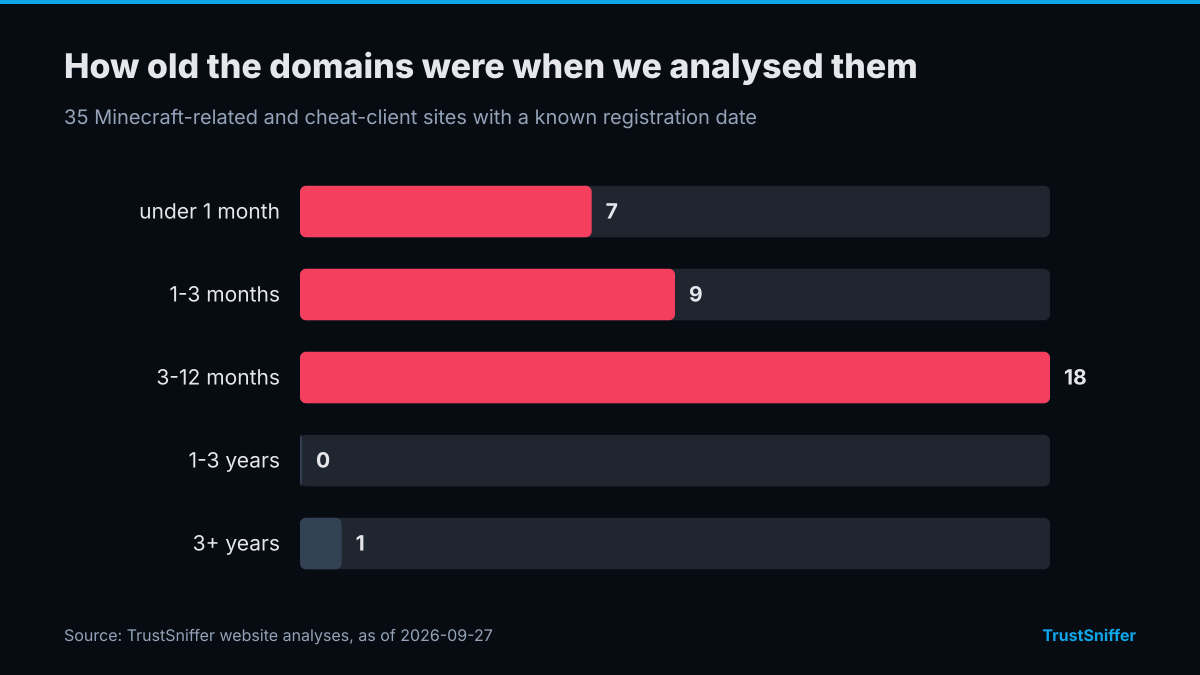
TrustSniffer has analysed 36 Minecraft-related and cheat-client sites. 31 of them (86%) were rated critical risk or low trust: 25 critical risk, 6 low trust, 3 moderate trust, 2 high trust. 34 of the 35 with a known registration date (97%) had a domain under a year old when we analysed it, and the median age was 4 months.
22 of them were registered through Web Commerce Communications Limited / WebNic. The networks they most often resolved to were FEMO IT SOLUTIONS LIMITED (13) and Cloudflare, Inc. (13). 26 of 36 (72%) were already flagged by at least one VirusTotal engine when we checked.
Some of the sites we analysed, each linked to its full report:
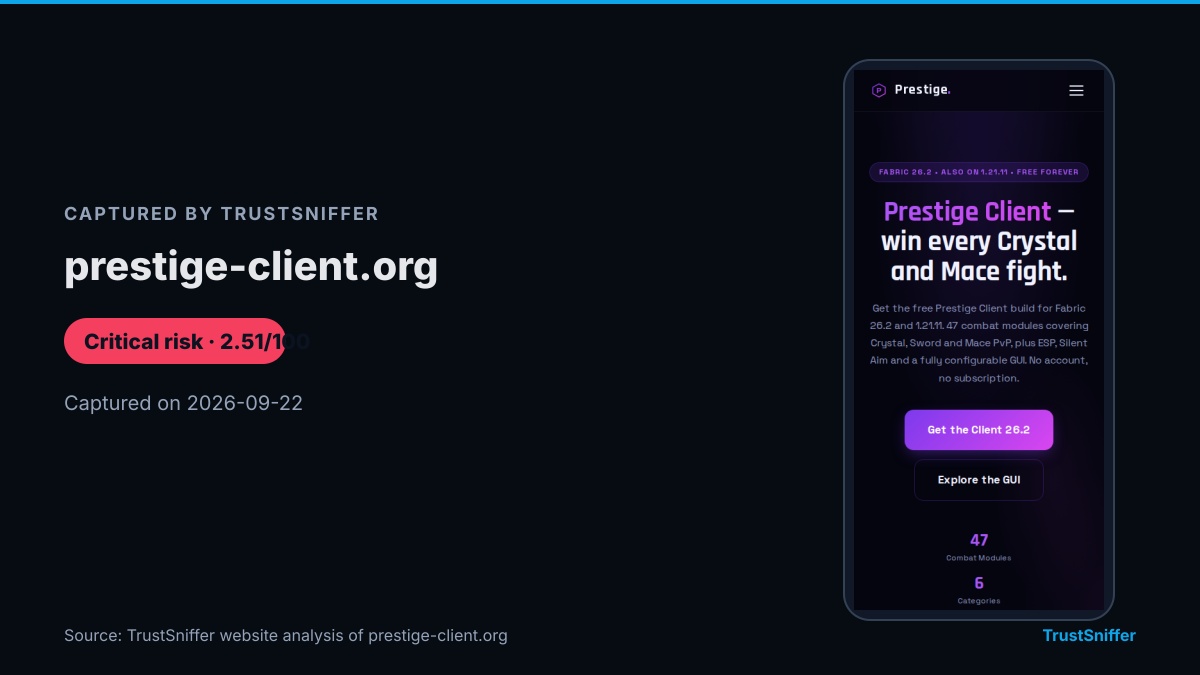
- prestige-client.org: rated critical risk (3/100), domain 1 month old when analysed.
- meteorclients.com: rated critical risk (5/100), domain 6 months old when analysed.
- cheetoclient.com: rated critical risk (0/100), domain 5 months old when analysed.
- breezeclient.com: rated critical risk (0/100), domain 5 months old when analysed.
The promise of premium features for free
The pitch is almost always the same shape. A page or forum post advertises a client with premium mods pre-installed, a launcher that bypasses account checks, or a mod pack said to be 'verified working.' The page pushes urgency: a limited mirror, a countdown, a claim that the link will be taken down soon.
There is usually no way to verify who built the file or where it actually came from. That absence of an identifiable publisher is itself a signal, since a legitimate mod or client is normally traceable to a known author or repository.
Disposable domains, free hosting and password-locked archives
These downloads sit on infrastructure that is quick to set up and quick to abandon once a page gets flagged. Pages turn up on less common domain extensions and free site builders, or on hosting platforms such as GitHub Pages, Cloudflare Pages, Firebase Hosting, Amazon S3 or Azure Blob Storage.
The file itself usually ships inside a password-protected archive, with the password printed on the page. That one step defeats most automated scanning, because a scanner cannot open the archive without the password a human has to type in. What comes out can be a direct .exe, a Java .jar file dressed up as the client itself, or a small script that fetches the real payload afterward.
This is the same pattern behind a lot of unofficial software distribution, and it is one reason TrustSniffer keeps a sanctions directory of entities and pages that have already been reviewed and flagged.
Minecraft players chasing mods, skins and cracked launchers
The audience is anyone looking for a shortcut to premium content, such as a mod pack, skin bundle or server client they would otherwise have to pay for. Younger players and gamers on a budget are more likely to search for 'free' or 'cracked' versions of paid content, which makes them easy targets for this bait.
Modders and small server communities are targets too. When they share files through casual links or unofficial repositories, a compromised or copied repository can push the same kind of tampered file to people who assumed a known creator had built it.
Before you click: signs a cracked client page is unsafe
The patterns below turn up again and again on pages like this, and you can spot all of them without special tools.
TrustSniffer has published analyses covering more than 5,300 websites, and this kind of throwaway, password-locked download page is a recurring shape in that work. If a link looks like this, running it through the website checker before opening anything is a faster and safer step than trusting the page's own claims.
The same review process sits alongside TrustSniffer's assessment of 17,419 cryptocurrency wallet addresses, part of a broader effort to track the infrastructure scams reuse, which is also summarized on the Risk Index.
- The domain is new, unusual, or uses an uncommon extension rather than a recognizable one
- The site is hosted on a free page builder or cloud storage link rather than a dedicated, identifiable publisher
- The download is a password-protected archive, with the password given on the same page
- The extracted file is a .exe or .jar that does not match the size or behavior expected of a game client
- The page pressures you with urgency ('limited mirror,' 'verified working,' a countdown) instead of offering verifiable information about who made it