Verdict
An external threat listing named this site as malicious when the evidence was captured. Do not pay or share personal details with this site.
crypto-iko.netlify.app shows critical-risk indicators.
- Sensitive Interaction Risk: This label is given when the overall risk is high. The captured page did not ask for a password, card number or other sensitive details; if it ever does, entering them here could be unsafe.
- Governance Risk: The governance checks raised a concern: a threat-intelligence listing limits the score; as a site on netlify.app, this address has no registration record of its own (the platform's domain is registered, not the site). The findings below give the detail.
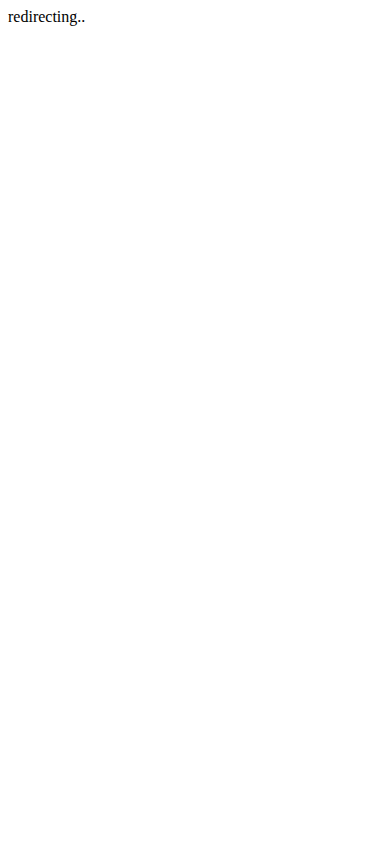
| How the site describes itself | The page shows only the text 'redirecting..' with no substantive content. No services, claims, or contact details are available to assess. |
|---|
Evidence status and limitations
Evidence completeness: CompleteThis says whether every check on the site was recorded as finished. All of them were.
- The evidence was captured on 2026-10-22 and re-scored on 2026-11-11. The certificate, the registration age and the page content describe the site as it was on 2026-10-22.
- One external source flagged this site when the evidence was captured (a threat-intelligence listing from a feed TrustSniffer monitors (phishing, the site itself as the source, last seen 2026-10-19)). No second source confirms it. The alert is from the evidence captured on 2026-10-22; it was not re-queried for this version and is treated as unconfirmed. On its own the alert would limit the score to at most 49; the threat-listing ceiling holds it at 5, because the listing names the site itself as the source.
- The real-world operator identity was not independently verified.
How to read these numbers
The trust score runs from 0 to 100, higher is safer. 5/100 rates the evidence found, not the probability that the site is a scam.
Evidence confidence (64%) measures how much of TrustSniffer's evidence set this site produced: the page reading, the browser sandbox, the web archive, the registration record and the reputation services. It falls when a check returns nothing, as listed above, and it does not change the score.
At a glance
The checks that decide most of this verdict.
| What limits the score | Threat-listing ceilingA threat-intelligence feed TrustSniffer monitors listed this site itself as the source of a threat when the evidence was captured (last seen 2026-10-19), and that listing caps the score. The unconfirmed alert ceiling (at most 49) also applies, but the score is below it. | Risk |
|---|---|---|
| Malware engines | None malicious; 1 marked it suspiciousVirusTotal | Watch |
| Google Safe Browsing | Not listedGoogle | Clear |
| Abuse reports on the CDN edge address | 1% confidenceAbuseIPDB, 4 reports; shared hosting inflates reports; this is the record of the CDN edge address, not of the server behind it, which was not observed | Noted |
| First seen | 11 days before captureWeb archive; a site on netlify.app has no registration of its own | Risk |
| Web archive | Archived since 20261 snapshot; the archive has almost no record of this site, which counted against it | Watch |
| Certificate | Encrypted connectionIssued by DigiCert Global G2 TLS RSA SHA256 2020 CA1 | Noted |
The page as captured
Key findings
- Automated classification: Sensitive Interaction Risk, Governance Risk.
- First seen: less than 1 year before capture (web archive; a site on netlify.app has no registration of its own).
- Public web-archive history exists since 2026.
- No security engine marked this domain as malicious and Google Safe Browsing does not list it; some engines marked it suspicious, which TrustSniffer does not count as a listing. Its hosting IP carries AbuseIPDB reports below the confidence level TrustSniffer treats as a flag.
Full analysis
Overview
This website is a bare single-page address on the Netlify free hosting platform. At capture, its homepage displayed only the 13-character text "redirecting.." and nothing else. It presented no products, services, branding, or business model, so its apparent purpose could not be determined from the page. The only visible function is to forward visitors elsewhere.
Scam/Impersonation Risk
A threat-intelligence feed listed this address as a source of phishing, with the site itself in the actor role rather than a victim. The listing was last seen on 19 October 2026, and the evidence was captured on 22 October 2026. This is the one contradiction in the record, and the score is held down by the threat-listing ceiling. One engine at the multi-engine scanner returned a suspicious verdict, and none returned a malicious one. That is a single weak signal, not a confirmation, and Google Safe Browsing did not list the address. No conflicting legal identities and no brand impersonation were observed. The page showed no forms, login, or payment fields, and across three behavioural runs it sent no data to other hosts. Because the page holds no content, the redirect destination is the unassessed part: the "redirecting.." text is the site's only claim, and it says nothing about where visitors are sent. The address carries the signature of a throwaway redirect stub, and its brief history gives no counterweight to the listing.
- Threat-intelligence listing: the site was listed as distributing phishing, with its last sighting on 2026-10-19.
- VirusTotal: 0 engines malicious and 1 suspicious, a single unconfirmed signal.
- Registration record: the address is a subdomain on a free hosting platform with no registration of its own. It was first seen in the web archive 11 days before capture.
- Web archive: 1 snapshot, first and last both on 2026-10-11, a span of 0 days.
Regulatory Verification Notes
On the single page read, the homepage, no contact channels and no terms or privacy information were found. It named no operator, company, or registration number. It also claimed no licence, so there is no licensing assertion to test. A business type could not be established, so no sector-specific regulatory expectations apply. The operator's real-world identity remains unverified, and nothing on the page connects it to a person or organisation. No third-party broker or regulatory-register entry matched this site. The transport certificate shows the hosting platform's name as the certificate subject, not any site operator, so it says nothing about who runs the site.
- Homepage: no contact channels, terms, privacy notice, company name, or licence reference appeared on the page read.
- Transport encryption: the TLS certificate was issued by DigiCert Global G2 TLS RSA SHA256 2020 CA1 with OV validation to "Netlify, Inc", and at capture it was valid until 2027-03-19.
- Hosting: at capture the site was served from the netlify.app hosting platform on Amazon Web Services addresses, and the host address's abuse record was checked and showed 4 reports.
What to Verify Next
Any prior reason for expecting contact from this address should be checked through a channel independent of the site. For example, if a link to it arrived by message or advertisement, the sender can be asked to confirm it through a separate route. A claimed affiliation with any organisation should be confirmed with that organisation directly, since the page itself makes no such claim. Where the redirect leads should be treated as a separate, unassessed destination that needs its own evaluation.
- Homepage: the only content was the redirect message, with no stated destination, organisation, or purpose.
- Threat-intelligence listing: the phishing classification applies to this address as the actor, which makes the origin of any inbound link the main thing worth checking.
Summary Verdict
The assessment is critical risk. A phishing-class listing against the address, combined with an empty page, a very recent first appearance, and no identifiable operator, leaves nothing to offset the adverse signal. The evidence supports no finding of legitimacy.
Infrastructure Integrity
The site is hosted on Amazon Web Services infrastructure behind a CDN. All four observed addresses were edge addresses, and no origin address was observable. A CDN is neutral here, and it neither supports nor weakens the assessment. The host address's abuse record was checked and showed four reports. They relate to a shared provider address used by many tenants and are not attributable to this site specifically. The certificate is valid and issued by a recognised authority, but it reflects the hosting platform's own arrangements and does not establish the operator's identity.
Closing Assessment
The address should not be treated as safe or followed onward. Any link to it should be treated as unsolicited, and no information should be entered on any page it redirects to. Dealings with whoever supplied the link should rest on identity confirmed through another route.
Written analysis generated 2026-11-11 by the TrustSniffer Analysis Engine from the evidence in this report.
What the analysis found
8 findings contributed to this verdict, raised by governance, page content, hosting and network, history in the web archive, and registration and ownership.
01 Governance
- A threat-intelligence feed TrustSniffer monitors listed this site itself as the source of a threat when the evidence was captured (last seen 2026-10-19), and that listing caps the score.Governance
rule:gov_active_threat_listing
02 Page content
- The page loaded on its own domain but had no readable content.Page content
rule:PAGE_CONTENT_EMPTY - The page runs on a free hosting-platform address instead of a domain of its own, a setup common to short-lived phishing and claim pages.Page content
rule:PAGE_FREE_PLATFORM_ADDRESS - The page has no title, which almost every website sets.Page content
rule:PAGE_TITLE_MISSING - The browser raised a warning while loading the page.Page content
rule:PAGE_BROWSER_FLAGS_SUSPICIOUS
03 Hosting and network
- The domain was registered, or a site on a hosting platform was first seen, less than three months before capture.Hosting and network
rule:DNS_NEW_DOMAIN_90D
04 History in the web archive
- The web archive has almost no record of this domain, which fits a site that is new.History in the web archive
rule:ARCH_PEN_YOUNG_AND_SPARSE
05 Registration and ownership
- As a site on netlify.app, this address has no registration record of its own (the platform's domain is registered, not the site).Registration and ownership
rule:KF_WHOIS_INCOMPLETE
Noted, not counted
Recorded during the assessment, but not counted against the site.
- AbuseIPDB: 4 reports on hosting IP 2a05:d014:58f:6200::258 (AMAZON-02), 1% confidence. The reports are attributed to shared infrastructure, not specifically to this website.
Identity verification
| Status | UNVERIFIED |
|---|
The operator behind the site could not be connected to a real-world brand or person. What the page shows, if anything, is listed below; none of it was independently checked.
- No contact detail, company registration number or linked social profile was extracted from the page for checking. Any operator the page names in its own words (see how the site describes itself, above) is not verified here.
What TrustSniffer observed
First-party facts recorded during the assessment of crypto-iko.netlify.app.
- The request stayed on crypto-iko.netlify.app. It was not redirected to another domain. Clear
- The earliest public archive of this site is from 2026-10-11. Watch
- It is hosted on AMAZON-02, a network registered in US. Noted
Domain intelligence
| Registrar | Not available |
|---|---|
| Hosting | AMAZON-02 - Amazon.com, Inc. |
| Network registered in | US |
| Server IP | 2a05:d014:58f:6200::258 (a CDN edge address; the server behind it was not observed) |
| Name servers | Not available |
| CDN / edge network | Detected (aws) |
| Resolved IP addresses | 4 |
| Edge IP addresses | 4 |
| Likely origin IP addresses | 0 |
| SSL issuer | DigiCert Global G2 TLS RSA SHA256 2020 CA1 |
| SSL expiry | 2027-03-19 |
| First seen (web archive) | 11 days before capture; a site on netlify.app has no registration of its own |
| Domain expiry | Not available |
| Archive first seen | 2026-10-11 (11 days before capture) |
| Archive snapshots | 1 |
| Reputation | VirusTotal: 0 malicious, 1 suspicious | AbuseIPDB (CDN edge address, not the host): 1% confidence, 4 reports | Google Safe Browsing: 0 matches |
About this assessment
A trust score summarises the evidence TrustSniffer could collect about crypto-iko.netlify.app at a point in time: domain registration and age, hosting and certificate, the content the site served, and third-party reputation feeds. A high score means the signals were consistent with a legitimately operated site; a low or critical score means several risk patterns were present. It is a starting point for your own judgement, not a guarantee and not a legal finding. There is no human rating and no user review in it. A site can change after it is assessed.