Verdict
Several risk patterns were present. Do not send money or personal details until you have verified this business another way.
crypto-t4j.netlify.app is low-trust and potentially risky.
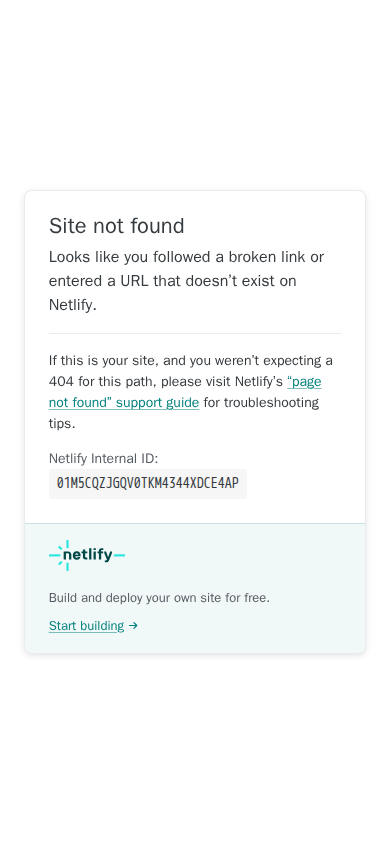
| What this site appears to be | The page is the default Netlify 'Site not found' 404 screen, indicating the requested site or path is not deployed on Netlify. It contains no business content, forms, links, or claims, so no meaningful trust or risk signals can be derived beyond the lack of information. |
|---|
Evidence status and limitations
Evidence completeness: Not recorded
- The real-world operator identity was not independently verified.
- Module-level completeness metadata is unavailable for this legacy report.
At a glance
The checks that decide most of this verdict.
| Malware engines | 2 flagged itVirusTotal | Risk |
|---|---|---|
| Google Safe Browsing | Not listedGoogle | Clear |
| Abuse reports on the host | 1% confidenceAbuseIPDB, 4 reports; shared hosting inflates reports | Clear |
| Domain age | 11 days oldMost scam domains are under a year old | Risk |
| Web archive | Archived since 20261 snapshot | Clear |
| Certificate | Encrypted connectionIssued by DigiCert Global G2 TLS RSA SHA256 2020 CA1 | Noted |
The page as captured
Key findings
- Automated classification: Sensitive Interaction Risk.
- Domain age: less than 1 year (registration continuity).
- Public web-archive history exists since 2026.
- At least one reputation service TrustSniffer consulted had flagged this domain at assessment time.
Full analysis
Security Alert
Kaspersky flagged this site in external intelligence checks, indicating elevated compromise/scam exposure that requires immediate caution.
The website is a newly created subdomain on a public web-hosting platform. Its name suggests a cryptocurrency theme, but it currently serves only the platform's stock "Site not found" error screen. That screen says the address does not exist on the platform, links to the platform's troubleshooting guide, and invites visitors to build their own site. The page shows no products, pricing, deposit mechanism, company description or stated purpose, so no business model is observable.
Scam/Impersonation Risk
Several independent warning signals converge on this site, and a confirmed blacklist condition is present. Multiple external threat-intelligence engines flag the address as malicious or suspicious, including one top-tier security vendor, and the site is listed on at least one external blacklist. The error page's content looks harmless, so the risk comes from what sits behind it and from how the address behaves. In automated sandbox runs, the page repeatedly exposed concealed forms, including password-entry forms, that a visitor cannot see on a plain 404 screen. It also underwent an unusually large number of page-structure changes after interaction, and almost all of its network traffic went to third-party destinations. This pattern fits a placeholder or staging shell that can be swapped for credential-harvesting content, and it is inconsistent with a genuinely empty error page. The hostname also closely resembles the hosting platform's own brand, which raised a brand-similarity flag. No brand-impersonation or conflicting-identity contradiction was confirmed, and this remains a similarity signal only. Separately, four abuse reports exist against a shared hosting address used by this site. Because that address serves many tenants, the reports are weak evidence about this specific operator, but they are not discounted. No contradictory legal identities were found, because the page publishes no identity information at all.
- Homepage: shows only the platform's default error screen, with no forms, links, products or claims visible to a human visitor.
- Sandbox behavioural runs: concealed forms, including password forms, appeared in all three runs, together with heavy post-interaction page restructuring and near-total third-party network traffic.
- Domain provenance: registered in 2026 and only about 12 days old (the age bracket where newly created domains carry the most risk).
- Web archive: a single snapshot, first and last seen on 2026-10-07, so one year tracked and no prior history to corroborate legitimacy.
Regulatory Verification Notes
The site publishes no legal entity name, licence, registration number, terms, privacy policy or contact route, so there is nothing to assess against a financial or crypto-asset registry. The operator's real-world identity is not independently connected to any person or company, and the associated ownership opacity compounds the reputational concerns above. This is a verification gap, not proof of wrongdoing on its own. The reputational concerns come from the threat-intelligence detections, not from the missing disclosures. Third-party broker-reputation data holds no entry for this site, so no external regulatory or broker standing can be cited in either direction. The valid certificate belongs to the hosting platform, not to an independently identified operator, and it confirms only encrypted transport, not who runs the site.
- Homepage: no company name, licence number, jurisdiction, terms or privacy documentation is present.
- Transport encryption: certificate issued by DigiCert Global G2 TLS RSA SHA256 2020 CA1 (OV), subject organisation Netlify, Inc, valid to 2027-03-19.
- Hosting: served from AS16509 (Amazon-02, Amazon.com, Inc., US).
- Third-party broker-reputation data: no matching entry.
What to Verify Next
Before any engagement, the party that supplied this address should be asked who operates it and what service it is meant to deliver. That answer should be confirmed through an independent, offline or previously known channel, not through any contact route found on the site. If the operator claims a financial or crypto-related service, the claimed entity and licence should be checked directly in the relevant regulator's public register. The address should also be compared character by character with the official domain of any brand the sender claims to represent, since the hostname resembles the hosting platform's brand. Only after the site is replaced by substantive content that passes these checks should it be re-evaluated, and the original sender should confirm the official support and contact channels independently.
- Homepage: no operator information is offered, so independent confirmation is the only path to identity.
- Hostname: carries a crypto-themed label on a shared hosting subdomain, which anyone can register.
- Sandbox runs: concealed password forms mean any later content on this address should be re-scanned before being trusted.
Summary Verdict
The overall posture is clearly cautionary. Confirmed blacklist and malicious-detection signals, together with behaviour that is inconsistent with a plain error page, outweigh the neutral appearance of the visible content. The operator's identity is unverified, and the site has no track record to offset these concerns.
Infrastructure Integrity
The site resolves to Amazon Web Services address space behind AWS-fronted CDN and WAF edge servers. All four observed addresses are edge nodes, and the origin server was not exposed. The certificate is valid, issued by a recognised authority, and has a long remaining validity. This is a mitigating factor only. It shows professional hosting and encrypted transport, but it cannot offset the external threat detections and does not establish who operates the site. Edge-only visibility also means the content behind the address can be changed quickly without any visible infrastructure change.
Closing Assessment
Treat the address as read-only at most: no logins, no credential or password entry, no wallet connections, no payments and no downloads, and avoid following it from unsolicited messages. Anyone who received it from a third party should treat the message as suspect. A security team should consider blocking the address pending a fresh assessment.
Written analysis generated 2026-10-20 by the TrustSniffer Analysis Engine from the evidence in this report.
What the analysis found
5 findings contributed to this verdict, raised by external reputation, behaviour in a sandbox, hosting and network, history in the web archive, page content.
01 External reputation
- Several malware engines flagged this domain.External reputation
rule:EXT_BLACKLIST_HIGH
02 Behaviour in a sandbox
- The page contained a form a visitor cannot see.Behaviour in a sandbox
rule:BEHAV_HIDDEN_FORMS
03 Hosting and network
- The domain was registered less than three months ago.Hosting and network
rule:DNS_NEW_DOMAIN_90D
04 History in the web archive
- The web archive has almost no record of this domain, which fits a site that is new.History in the web archive
rule:ARCH_PEN_YOUNG_AND_SPARSE
05 Page content
- The page appears to present itself as a known brand it is not verified to belong to.Page content
rule:PAGE_BRAND_SUSPECTED
Signals weighed against the site
- AbuseIPDB: 4 reports on hosting IP 2a05:d014:58f:6200::258 (Amazon Data Services Ireland Ltd, Content Delivery Network), 1% confidence. The reports are attributed to shared infrastructure, not specifically to this website.
Identity verification
| Status | UNVERIFIED |
|---|---|
| Identity score | 30/100 |
| Identity verification confidence | 50% |
- No on-site identity signals detected
Identity verification measures whether the site can be independently connected to a real-world brand or person. It is separate from the classification confidence.
What TrustSniffer observed
First-party facts recorded during the assessment of crypto-t4j.netlify.app.
- The request stayed on crypto-t4j.netlify.app. It was not redirected to another domain. Clear
- The earliest public archive of this site is from 2026-10-07. Clear
- It is hosted on AMAZON-02, from a server in US. Noted
Domain intelligence
| Registrar | Not available |
|---|---|
| Hosting | AMAZON-02 - Amazon.com, Inc., US |
| Country | US |
| Server IP | 2a05:d014:58f:6200::258 |
| Name servers | Not available |
| CDN / edge network | Detected (aws) |
| Resolved IP addresses | 4 |
| Edge IP addresses | 4 |
| Likely origin IP addresses | 0 |
| SSL issuer | DigiCert Global G2 TLS RSA SHA256 2020 CA1 |
| SSL expiry | 2027-03-19 |
| Domain age | 0.03 years (continuous registration) |
| Domain expiry | Not available |
| Archive first seen | 2026-10-07 |
| Archive snapshots | 1 |
| Reputation | VirusTotal: 2 flagged | AbuseIPDB: 1% confidence, 4 reports | Google Safe Browsing: 0 matches |
About this assessment
A trust score summarises the evidence TrustSniffer could collect about crypto-t4j.netlify.app at assessment time. It is a starting point for your own judgement, not a guarantee: a high score means the signals were consistent with a legitimately operated site, a low or critical score means several risk patterns were present.
TrustSniffer assesses a website from the evidence it can collect at a point in time: domain registration and age, hosting and certificate, the content the site served, and third-party reputation feeds. A score is a summary of that evidence, not a guarantee and not a legal finding. There is no human rating and no user review in it. A site can change after it is assessed.