Verdict
An external threat listing named this site as malicious when the evidence was captured. Do not pay or share personal details with this site.
multiecosystem.netlify.app shows critical-risk indicators.
- Sensitive Interaction Risk: This label is given when the overall risk is high. The captured page did not ask for a password, card number or other sensitive details; if it ever does, entering them here could be unsafe.
- Governance Risk: A registration check came back incomplete: as a site on netlify.app, this address has no registration record of its own (the platform's domain is registered, not the site). That is a gap in what could be looked up, not a sign that ownership is hidden, and it does not say who runs the site.
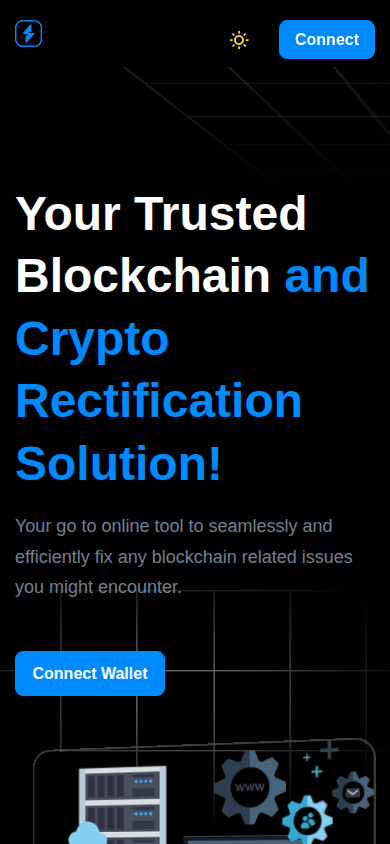
| How the site describes itself | A crypto 'rectification' service page offering wallet connection, wallet refunds, airdrop claims, token trading, and staking fixes. It requests wallet connection for high-stakes actions while providing no verifiable legal identity, address, contact channel, pricing, refund policy, or audit evidence. |
|---|
Evidence status and limitations
Evidence completeness: CompleteThis says whether every check on the site was recorded as finished. All of them were.
- The evidence was captured on 2026-11-01 and re-scored on 2026-11-05. The certificate, the registration age and the page content describe the site as it was on 2026-11-01.
- The real-world operator identity was not independently verified.
How to read these numbers
A trust score of 0 means the risk evidence outweighed every trust signal by more than the 0 to 100 scale can show. It rates the evidence found, not the probability that the site is a scam.
Evidence confidence (75%) measures how much of TrustSniffer's evidence set this site produced: the page reading, the browser sandbox, the web archive, the registration record and the reputation services. It falls when a check returns nothing, as listed above, and it does not change the score.
At a glance
The checks that decide most of this verdict.
| Malware engines | 3 marked it maliciousVirusTotal | Risk |
|---|---|---|
| Google Safe Browsing | Not listedGoogle | Clear |
| Abuse reports on the CDN edge address | 0% confidenceAbuseIPDB, 2 reports; shared hosting inflates reports; this is the record of the CDN edge address, not of the server behind it, which was not observed | Noted |
| First seen | 4 months before captureWeb archive; a site on netlify.app has no registration of its own | Risk |
| Web archive | Archived since 20261 snapshot | Clear |
| Certificate | Encrypted connectionIssued by DigiCert Global G2 TLS RSA SHA256 2020 CA1 | Noted |
The page as captured
Key findings
- Automated classification: Sensitive Interaction Risk, Governance Risk.
- First seen: less than 1 year before capture (web archive; a site on netlify.app has no registration of its own).
- Public web-archive history exists since 2026.
- At least one reputation service TrustSniffer consulted had flagged this domain when the evidence was captured.
Full analysis
Scam/Impersonation Risk
Contradictory signals are present, and the assessment is high-risk. Several independent threat-intelligence engines currently flag the site as malicious or suspicious, and this forms a confirmed blacklist-level reputational finding. Behavioural testing separately found strong cloaking. After simulated interaction, the page's content and appearance changed substantially, with more than a thousand page-structure mutations, dozens of console errors, and background requests to third-party destinations outside the expected set. The business model has the profile of a wallet-drainer or recovery-scam funnel. The homepage's calls to action ("Connect Wallet", "Claim Reward", "Click here to migrate to new contract address", "Fix Wallet Problem", "Refund") steer visitors towards granting wallet access, the typical mechanism for draining funds. They are paired with an offer to recover lost cryptocurrency, a lure that commonly targets previous scam victims. The site gives no pricing, fee structure, custody terms, audit reference or track record to back the claim that it can fix any blockchain issue. Two abuse reports exist against an address used by the site's hosting provider. They relate to shared cloud infrastructure rather than to this site specifically, so they carry no weight here. The blacklist-level finding and the cloaking stand independently of them. No direct brand impersonation or conflicting legal identities were identified. Evidence: Homepage: wallet-connection, claim-reward, refund and "new contract address" migration prompts, with no accompanying pricing, custody terms or audit evidence. Homepage behaviour: strong content change after interaction (about 35% semantic and 21% visual difference), 1,122 page mutations and 49 console errors across three test runs. Domain provenance: continuity age of about 0.33 years (~119 days), with a single archive snapshot (2026) and one year tracked, so there is no established history. Hosting-address abuse reports: 2 reports, attributed to shared infrastructure and discounted.A console error is a technical error message that the page's own code reported inside the browser while it ran. It describes how the page is built, and on its own it is not proof that the site is harmful.
Scam/Impersonation Risk
Contradictory signals are present, and the assessment is high-risk. Several independent threat-intelligence engines currently flag the site as malicious or suspicious, and this forms a confirmed blacklist-level reputational finding. Behavioural testing separately found strong cloaking. After simulated interaction, the page's content and appearance changed substantially, with more than a thousand page-structure mutations, dozens of console errors, and background requests to third-party destinations outside the expected set. The business model has the profile of a wallet-drainer or recovery-scam funnel. The homepage's calls to action ("Connect Wallet", "Claim Reward", "Click here to migrate to new contract address", "Fix Wallet Problem", "Refund") steer visitors towards granting wallet access, the typical mechanism for draining funds. They are paired with an offer to recover lost cryptocurrency, a lure that commonly targets previous scam victims. The site gives no pricing, fee structure, custody terms, audit reference or track record to back the claim that it can fix any blockchain issue. Two abuse reports exist against an address used by the site's hosting provider. They relate to shared cloud infrastructure rather than to this site specifically, so they carry no weight here. The blacklist-level finding and the cloaking stand independently of them. No direct brand impersonation or conflicting legal identities were identified.
- Homepage: wallet-connection, claim-reward, refund and "new contract address" migration prompts, with no accompanying pricing, custody terms or audit evidence.
- Homepage behaviour: strong content change after interaction (about 35% semantic and 21% visual difference), 1,122 page mutations and 49 console errors across three test runs.
- Domain provenance: continuity age of about 0.33 years (~119 days), with a single archive snapshot (2026) and one year tracked, so there is no established history.
- Hosting-address abuse reports: 2 reports, attributed to shared infrastructure and discounted.
Regulatory Verification Notes
The site gives no verifiable basis for operating a financial-adjacent service. The homepage names no legal entity, registered address, licence or registration number, contact channel, refund policy, or terms for the funds and wallet permissions it asks visitors to hand over. Services such as wallet refunds, token trading and staking activation are high-stakes, and no regulatory standing is claimed or independently evidenced. The site's real-world operator remains unidentified. The valid transport-encryption certificate is issued to the hosting platform, not to the site's operator. It therefore says nothing about who runs the service. No external broker-reputation record was matched, and the reputational concern rests on the threat detections described above.
- Homepage: no company name, jurisdiction, licence, physical address or contact channel is published, and no legal or policy pages are linked.
- Site hosting: served from AS16509 (AMAZON-02, Amazon.com, Inc., US); the site is a subdomain on a shared hosting-platform domain, not a standalone registered brand domain.
- Transport encryption: organisation-validated (OV) certificate issued by DigiCert Global G2 TLS RSA SHA256 2020 CA1 to Netlify, Inc, valid to 2027-03-19 (about 138 days remaining).
- Crypto footprint: the site is not recognised in public DeFi protocol directories, so no TVL or market-capitalisation figure is available to support its claims.
What to Verify Next
Verification should start from independent, offline routes rather than anything the site offers. Anyone who has already connected a wallet, signed a transaction or approved a token permission here should review their wallet's active approvals and revoke any granted to unfamiliar contracts. Any "new contract address" or "migration" instruction should be checked only against the official announcement channels of the project the visitor actually holds tokens in. A recovery or refund claim should be treated as unsolicited until the supposed provider is confirmed through an independent regulatory register. Official support or contact channels should be confirmed from sources outside this site.
- Homepage: the migration, claim-reward and wallet-validation prompts all depend on wallet connection, so the first step is auditing existing approvals.
- Homepage: the service catalogue has no named team, entity or registry reference to check against any financial-services register.
- Threat detections: multiple engines currently flag the site, so any prior interaction should be treated as potentially exposed.
Summary Verdict
The available evidence supports a clearly high-risk, cautionary posture. Confirmed threat detections, deceptive page behaviour and a wallet-access model with no accountable operator converge on the same conclusion. Technical hygiene does not offset this, and the site's real-world identity remains unverified.
Infrastructure Integrity
The site sits behind Amazon's content-delivery and web-application-protection layer. All observed addresses are edge nodes, and the origin server could not be observed. Standard protective infrastructure and a valid certificate are mitigating factors only. They show competent platform hosting and do not offset the reputational and behavioural risk, since such services are equally available to hostile operators. Edge-only visibility also means the underlying content cannot be independently verified and could be swapped quickly.
Closing Assessment
The site should not be used for anything beyond passive viewing. Wallets should not be connected, credentials should not be entered, and no payments, token approvals or signed transactions should be made. Anyone who has already interacted should move remaining assets to a fresh wallet and revoke existing permissions.
Written analysis generated 2026-11-05 by the TrustSniffer Analysis Engine from the evidence in this report.
What the analysis found
6 findings contributed to this verdict, raised by external reputation, behaviour in a sandbox, page content and several checks together.
01 External reputation
- Three or more VirusTotal engines, or two including a leading vendor, marked this domain as malicious.External reputation
rule:EXT_BLACKLIST_HIGH
02 Behaviour in a sandbox
- During the sandbox session the page showed markedly different content to different visitor profiles. This can have ordinary causes such as bot defence, and it can also hide content from checks.Behaviour in a sandbox
rule:BEHAV_CLOAKING_STRONG
03 Page content
- The review of the page content rated it high risk.Page content
rule:PAGE_RISK_HIGH - The page shows few of the signs expected from a trustworthy operator.Page content
rule:PAGE_TRUST_QUALITY_LOW - The page content shows three or more warning signs that deceptive sites commonly use.Page content
rule:PAGE_RED_FLAGS_STRONG
04 Several checks together
- Several independent checks pointed to risk at the same time.Several checks together
rule:HYB_MULTIPLE_MODULES_HIGH_RISK
Noted, not counted
Recorded during the assessment, but not counted against the site.
- AbuseIPDB: 2 reports on hosting IP 2a05:d014:58f:6200::259 (AMAZON-02), 0% confidence. The reports are attributed to shared infrastructure, not specifically to this website.
Identity verification
| Status | UNVERIFIED |
|---|
The operator behind the site could not be connected to a real-world brand or person. What the page shows, if anything, is listed below; none of it was independently checked.
- No contact detail, company registration number or linked social profile was extracted from the page for checking. Any operator the page names in its own words (see how the site describes itself, above) is not verified here.
What TrustSniffer observed
First-party facts recorded during the assessment of multiecosystem.netlify.app.
- The request stayed on multiecosystem.netlify.app. It was not redirected to another domain. Clear
- The earliest public archive of this site is from 2026-07-04. Clear
- It is hosted on AMAZON-02, a network registered in US. Noted
Domain intelligence
| Registrar | Not available |
|---|---|
| Hosting | AMAZON-02 - Amazon.com, Inc. |
| Network registered in | US |
| Server IP | 2a05:d014:58f:6200::259 (a CDN edge address; the server behind it was not observed) |
| Name servers | Not available |
| CDN / edge network | Detected (aws) |
| Resolved IP addresses | 4 |
| Edge IP addresses | 4 |
| Likely origin IP addresses | 0 |
| SSL issuer | DigiCert Global G2 TLS RSA SHA256 2020 CA1 |
| SSL expiry | 2027-03-19 |
| First seen (web archive) | 120 days before capture; a site on netlify.app has no registration of its own |
| Domain expiry | Not available |
| Archive first seen | 2026-07-04 (120 days before capture) |
| Archive snapshots | 1 |
| Reputation | VirusTotal: 3 malicious | AbuseIPDB (CDN edge address, not the host): 0% confidence, 2 reports | Google Safe Browsing: 0 matches |
About this assessment
A trust score summarises the evidence TrustSniffer could collect about multiecosystem.netlify.app at a point in time: domain registration and age, hosting and certificate, the content the site served, and third-party reputation feeds. A high score means the signals were consistent with a legitimately operated site; a low or critical score means several risk patterns were present. It is a starting point for your own judgement, not a guarantee and not a legal finding. There is no human rating and no user review in it. A site can change after it is assessed.