Stablecoin freezes on July 29, 2026
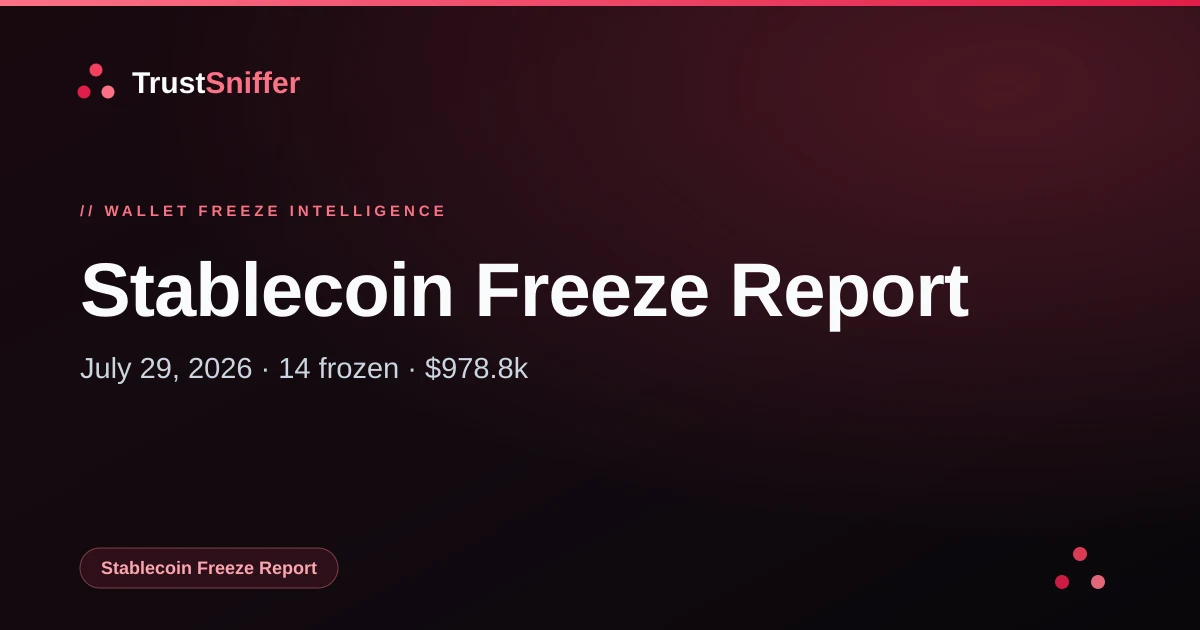
Stablecoin issuers recorded 14 new freezes across Ethereum and TRON on July 29, immobilising $978.8k in USDT and USDC. TRON accounted for 12 freezes and the full amount, while Ethereum recorded 2 freezes with $0.00 held.
- Ethereum: 2 freezes, $0.00 frozen
- TRON: 12 freezes, $978.8k frozen
Largest freeze of the day
The single largest freeze on July 29, 2026 was $242.5k on TRON, on the address TRdZcgeF…hL5A. Open its analysis page for the full risk verdict, exposure trace, and connected addresses.
Why these freezes matter
Today’s activity was concentrated on TRON, both by freeze count and value. The largest single freeze was $242.5k, showing that a meaningful share of the day’s immobilised funds sat in one TRON account.
The Ethereum actions still matter despite involving $0.00. Freezing empty accounts can restrict future use and indicates that issuer controls are applied beyond accounts holding funds at the time of intervention.
The cumulative figures remain substantial: 10113 addresses are currently frozen, $3.53B is immobilised, and 11435 addresses have ever been blacklisted. Today’s additions extend that enforcement footprint across both monitored networks.
- Check the address before you send. Paste any Ethereum or TRON address into the free wallet checker for its verdict, exposure trace, and connected addresses.
- Do not read a zero balance as a clean result. Two of the July 29 actions held $0.00 and were still issuer interventions.
- Treat the status as changeable. An issuer can un-blacklist an address later, so recheck rather than assume.
- Screen the site or service that handed you the address with the website checker.
- Put a single address in context using the sanctions directory and the live Risk Index.
If an address you deal with turns up on one of these lists, the practical effect is immediate: the USDT or USDC sitting there cannot be moved until the issuer reverses the action. Anything sent to it afterwards is subject to the same restriction, so a blacklisted counterparty is an operational problem and not just a reputational one. Because the day's value sat entirely on TRON, it is worth checking the network as well as the address itself.
What this means if you hold stablecoins
Wallets frozen on July 29, 2026
Each frozen address is listed below with the amount frozen, linking to its dedicated TrustSniffer analysis (verdict, exposure trace, and connected wallets).
- TRdZcgeF…hL5A on TRON, $242.5k frozen
- TGJiwKnB…S8iQ on TRON, $205.3k frozen
- TUTEvgbS…qBCC on TRON, $187.5k frozen
- TMRU9syY…6v2c on TRON, $114.7k frozen
- TBzJFUqz…zcWs on TRON, $51.8k frozen
- TP8ACka7…r3d8 on TRON, $48.0k frozen
- TQhFRKd7…vBtd on TRON, $41.8k frozen
- TD7PRshe…jG4J on TRON, $38.6k frozen
- THm32Bfa…WeZT on TRON, $32.3k frozen
- TYkXqxow…DjGV on TRON, $16.2k frozen
- 0x0edE56…B1Fb on Ethereum, $0.00 frozen
- 0xDca63D…99ad on Ethereum, $0.00 frozen
- TRdZcgeFc42cHJTff1bQE84TEquowRhL5A on TRON, $0.00 frozen
- TYkXqxowzrzh8c9wubh64NRLJjcrUyDjGV on TRON, $0.00 frozen
The running picture
As of July 29, 2026, TrustSniffer's freeze index counts 10,113 addresses currently frozen by stablecoin issuers across Ethereum and TRON, holding roughly $3.53B in immobilised funds, out of 11,435 addresses ever blacklisted. Browse the full picture in the live Risk Index and the sanctions directory.
How TrustSniffer tracks freezes
Every figure here comes from TrustSniffer's own on-chain monitoring: it listens directly to the USDT and USDC issuer contracts on Ethereum and TRON and records each blacklist and un-blacklist event as it happens. Bulk imports and non-issuer flags are excluded, so this report reflects real issuer freezes only. To check an address yourself, use the free wallet-risk checker; to screen a website, use the website checker.
- Stablecoin freeze
- An on-chain action in which a token issuer (such as Tether for USDT or Circle for USDC) blacklists a specific address, preventing the affected stablecoins from being moved from it. Issuers do this in response to sanctions, law-enforcement requests, or theft. A freeze can later be reversed by the issuer.
Frequently asked questions
What does it mean when a stablecoin wallet is frozen?
How can I check a specific frozen wallet?
Which networks does this report cover?
How current is this data?
Readers assessing stablecoin exposure should treat issuer blacklist status as a direct operational risk and monitor both current balances and newly frozen accounts, including those that appear empty.