Stablecoin freezes on August 13, 2026
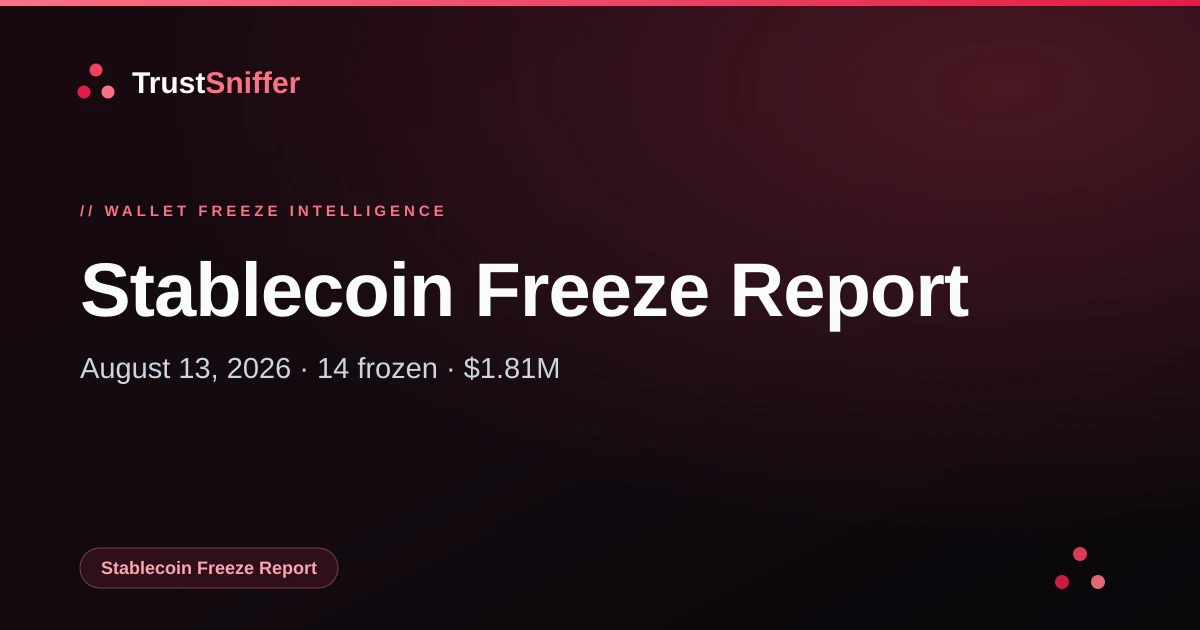
Across the networks TrustSniffer traces, issuers froze 14 addresses on August 13, 2026, removing about $1.81M in USDT and USDC from circulation. A freeze means the token issuer blacklisted the address on-chain, so the affected stablecoins can no longer be moved from it.
- Ethereum: 2 freezes, $0.00 frozen
- TRON: 12 freezes, $1.81M frozen
Largest freeze of the day
The single largest freeze on August 13, 2026 was $684.5k on TRON, on the address TDr4q3nDGq1yUxVsuWpV5noXupttfXC2MQ. Open its analysis page for the full risk verdict, exposure trace, and connected addresses.
Wallets frozen on August 13, 2026
Each frozen address is listed below with the amount frozen, linking to its dedicated TrustSniffer analysis (verdict, exposure trace, and connected wallets).
- TDr4q3nDGq1yUxVsuWpV5noXupttfXC2MQ on TRON, $684.5k frozen
- TDmD9n821dv3vcbt6LuymC4yF4wtoMB9EX on TRON, $512.4k frozen
- TTqszC9yQCJ1KFwXkJYMh6cKQeYwfCeQiq on TRON, $192.9k frozen
- TD2v5dCoxoqN6uTZDLi31RW9vRV45zWUMq on TRON, $159.1k frozen
- THBedijiTDmeBfXBKgMWEJ9DxQPGtpVwx8 on TRON, $150.1k frozen
- TUeZcAbo6Z7r6FygFDosey2EyvsgrU7i2P on TRON, $68.4k frozen
- TLLz5vP7UFcAyHDosPv6B9wKVwVsR1CqAf on TRON, $32.8k frozen
- THoBLvcm1fYebGTbvtkZ9UGKgNYsuiufT8 on TRON, $10.1k frozen
- TPTtDu2VBSY8LXgkoAAKR6qXinNKa2qZdj on TRON, $1.5k frozen
- TPWKoS52QYVKe8oWy3PoTxm4YiMdhJhLTi on TRON, $200.00 frozen
- TRHE7iMRPpLeVdYt5667NmDZuEo1NaWnbe on TRON, $124.55 frozen
- TDosRsx3togaxjJeEPiHePv9joomzE3QLe on TRON, $0.33 frozen
- 0x44b55C397850e958b810FEE379A96326c7B87813 on Ethereum, $0.00 frozen
- 0x5d442668f0920D6aE7e086D29412C70108f9Ceef on Ethereum, $0.00 frozen
The running picture
As of August 13, 2026, TrustSniffer's freeze index counts 10,102 addresses currently frozen by stablecoin issuers across Ethereum and TRON, holding roughly $3.53B in immobilised funds, out of 11,430 addresses ever blacklisted. Browse the full picture in the live Risk Index and the sanctions directory.
How TrustSniffer tracks freezes
Every figure here comes from TrustSniffer's own on-chain monitoring: it listens directly to the USDT and USDC issuer contracts on Ethereum and TRON and records each blacklist and un-blacklist event as it happens. Bulk imports and non-issuer flags are excluded, so this report reflects real issuer freezes only. To check an address yourself, use the free wallet-risk checker; to screen a website, use the website checker.
- Paste the wallet into the free wallet-risk checker for its verdict, sanctioned-exposure trace, and connected wallets.
- Read the exposure trace, not only the verdict: it shows how closely the funds sit to money that was already flagged.
- If the payment came through a platform rather than a private wallet, screen that site with the website checker.
- Keep your own records of transaction hashes, dates, and amounts, in case an exchange or an investigator asks for them later.
- Check the sanctions directory before your next transfer, so you are screening ahead of an issuer action rather than after one.
A freeze applies to one wallet, not to a whole network and not to everyone who ever touched it. If you sent money to one of the wallets listed above, or received money from it, the stablecoins held there can no longer be moved, and only the issuer can reverse that. The more useful question for most people is narrower: was this counterparty already showing risk before the issuer acted? That is something you can check yourself in about a minute, and it costs nothing.
What to do if a frozen wallet touched your funds
- Stablecoin freeze
- An on-chain action in which a token issuer (such as Tether for USDT or Circle for USDC) blacklists a specific address, preventing the affected stablecoins from being moved from it. Issuers do this in response to sanctions, law-enforcement requests, or theft. A freeze can later be reversed by the issuer.
Frequently asked questions
What does it mean when a stablecoin wallet is frozen?
How can I check a specific frozen wallet?
Which networks does this report cover?
How current is this data?
Freezes are a lagging signal: by the time an issuer blacklists an address, the funds are often already flagged as high-risk. TrustSniffer's monitoring frequently identifies an address as a freeze candidate before the issuer acts, which is why screening a counterparty in advance, rather than after a freeze, is the safer habit.