Stablecoin freezes on September 1, 2026
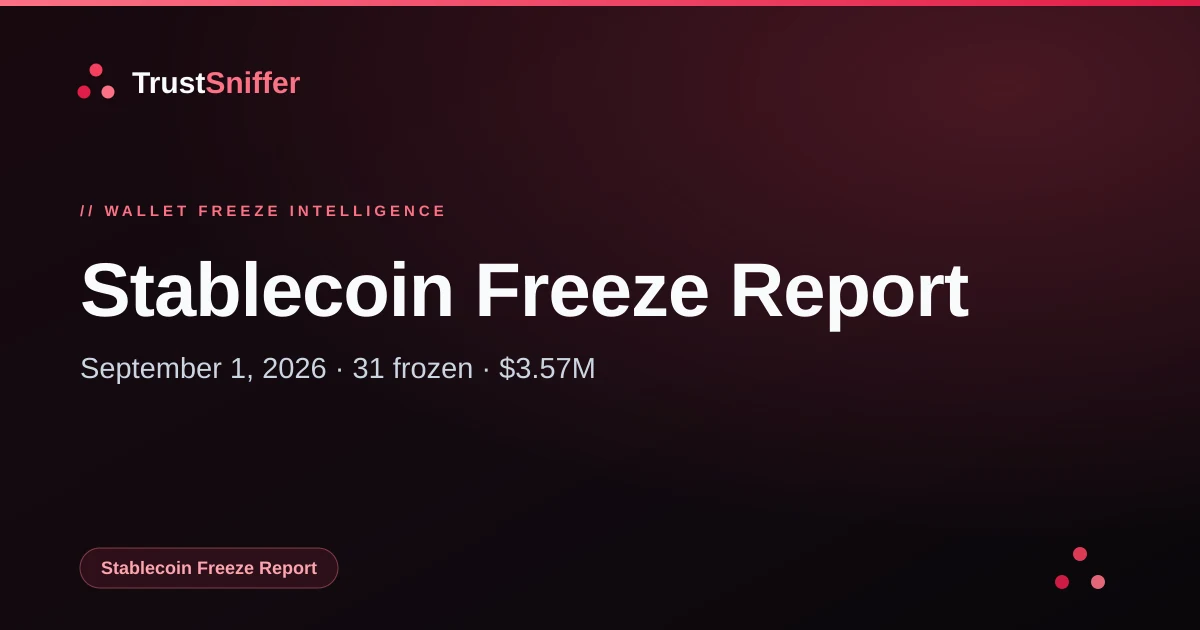
Across the networks TrustSniffer traces, issuers froze 31 addresses on September 1, 2026, removing about $3.57M in USDT and USDC from circulation. A freeze means the token issuer blacklisted the address on-chain, so the affected stablecoins can no longer be moved from it.
- TRON: 31 freezes, $3.57M frozen
Largest freeze of the day
The single largest freeze on September 1, 2026 was $875.9k on TRON, on the address TMJa6FWP4szk5RHJX26hfeHx6KXXu3d2sY. Open its analysis page for the full risk verdict, exposure trace, and connected addresses.
Wallets frozen on September 1, 2026
Each frozen address is listed below with the amount frozen, linking to its dedicated TrustSniffer analysis (verdict, exposure trace, and connected wallets).
- TMJa6FWP4szk5RHJX26hfeHx6KXXu3d2sY on TRON, $875.9k frozen
- TGEXn4HzdRHz83cNqGCobAzg558VFR9K2d on TRON, $625.2k frozen
- TFTVCCTPv9XYzw1qxKhsAj5b9ZPEjXGntw on TRON, $349.1k frozen
- TACMY3DirsYFFKgoVJzWdzV5LwsJEqZJZy on TRON, $200.7k frozen
- TKzYEa8oTtP1QNEMwSBtYSm8CNDw3a5mBn on TRON, $193.4k frozen
- TLArJsx4ZnACgHbneKKoP3WxZhPDk6uZhL on TRON, $185.1k frozen
- TVUWRJmoFk37BCyWKHGwoFqBLmm6NnViCz on TRON, $154.6k frozen
- TMdWUkiowbxD6UhQJsuDxrd8DeFHp2Yitj on TRON, $105.0k frozen
- TPbiyLgz33MhsTuSmW3r3g2uC38EBCPQHm on TRON, $103.5k frozen
- TWPZJdExF6bWoSp4gS2VS6PCebnApxkxQa on TRON, $100.0k frozen
- TAjVSq6VJcdn5moqVKRfWCMtWszEXHi9fS on TRON, $98.4k frozen
- TPgrS2uQ5HmMcxpKDK7iNCQnSFkuwwWmU8 on TRON, $97.1k frozen
- TKtdEG2oRVkoDSHvbzwuH9NdxiMSRst9V3 on TRON, $92.0k frozen
- TTDskJXsPXKaPN7tG9J5xozNk4YTQZhDuq on TRON, $72.7k frozen
- TZBgUwt1MmSSHHKPSx9pnRVfAGi28RdohY on TRON, $53.7k frozen
- TA35F3FjjnyU3sBTZLfqnNnCgLCLqXsLps on TRON, $50.0k frozen
- TEX4dCyHchcmZmEE321FP4AW3udJaJRnqq on TRON, $50.0k frozen
- TA92gaSqHukCM3Tvtw5mp6YTrcJrhRfF34 on TRON, $36.3k frozen
- TD7hp61dWZB3zt5nzk2UqP4xAFCuhmdUJd on TRON, $26.9k frozen
- TSu7PhwKD1T7WtCX8wXCMQcAEBMLiJedcm on TRON, $24.1k frozen
- TNfQEkVCT4yMv7ANosS8FvF7GJp6yS3XSk on TRON, $17.9k frozen
- TTdXCwvVLTA2fLjuDzLWdHhvbFeMmY43ZR on TRON, $14.5k frozen
- TEcD1EJN3Fqk91bvh9WSebXLQdQPUjQCA8 on TRON, $11.4k frozen
- TWkn7v6fcsvFBem1bAkgHxXa7NHt4KizPn on TRON, $6.0k frozen
- THe1JrW9iP7hmu5J35VsnPb6X8o33XbSbF on TRON, $5.8k frozen
- TBaajirS5Tgw467o8GvH91AueSDphjePDX on TRON, $4.7k frozen
- TGbZV6bYA8f66v6e7CnvSGbZBj7W45PRiD on TRON, $3.8k frozen
- TGBmpWRWoicqPoDh2GyisGsZ5yCayCB6Jo on TRON, $3.6k frozen
- TN8L3NALetJGcTdX8uPL4nLHuV5aqNtLNn on TRON, $3.2k frozen
- TGdghcMfYZofzHV2WTjT9Dgg7ehn3ewESN on TRON, $2.2k frozen
71yag2Hs2X3XujBSc4z5k2uRyXXcLooxcon TRON, $0.00 frozen
Entries are ordered by the amount immobilised, largest first. Being listed means the issuer blacklisted that wallet on-chain, so the USDT or USDC sitting there cannot be moved while that stays in place. It is an action against one specific wallet, not a verdict on everyone who has ever transacted with it. Open any link above to read the verdict, the sanctioned-exposure trace, and the connected wallets.
The running picture
As of September 1, 2026, TrustSniffer's freeze index counts 10,297 addresses currently frozen by stablecoin issuers across TRON, holding roughly $3.52B in immobilised funds, out of 11,635 addresses ever blacklisted. Browse the full picture in the live Risk Index and the sanctions directory.
The two running totals are worth reading together: 10,297 wallets are blacklisted right now, while 11,635 have been at some point. The gap exists because an issuer can also reverse a freeze it applied earlier. So the daily tally is a snapshot rather than a list that only grows, and the current figure is the one to lean on when you are assessing a counterparty today.
How TrustSniffer tracks freezes
Every figure here comes from TrustSniffer's own on-chain monitoring: it listens directly to the USDT and USDC issuer contracts on TRON and records each blacklist and un-blacklist event as it happens. Bulk imports and non-issuer flags are excluded, so this report reflects real issuer freezes only. To check an address yourself, use the free wallet-risk checker; to screen a website, use the website checker.
- Paste a wallet into the free wallet-risk checker before you send, not after.
- Look past the listing itself: the exposure trace and the connected wallets show how funds actually moved.
- If a website or a stranger asked you to pay that wallet, screen the site with the website checker.
- Cross-check what you find against the sanctions directory and the running numbers in the live Risk Index.
- Check again before a large or repeat payment, since new blacklistings land every day.
- Stablecoin freeze
- An on-chain action in which a token issuer (such as Tether for USDT or Circle for USDC) blacklists a specific address, preventing the affected stablecoins from being moved from it. Issuers do this in response to sanctions, law-enforcement requests, or theft. A freeze can later be reversed by the issuer.
Frequently asked questions
What does it mean when a stablecoin wallet is frozen?
How can I check a specific frozen wallet?
Which networks does this report cover?
How current is this data?
Freezes are a lagging signal: by the time an issuer blacklists an address, the funds are often already flagged as high-risk. TrustSniffer's monitoring frequently identifies an address as a freeze candidate before the issuer acts, which is why screening a counterparty in advance, rather than after a freeze, is the safer habit.