Stablecoin freezes on September 17, 2026
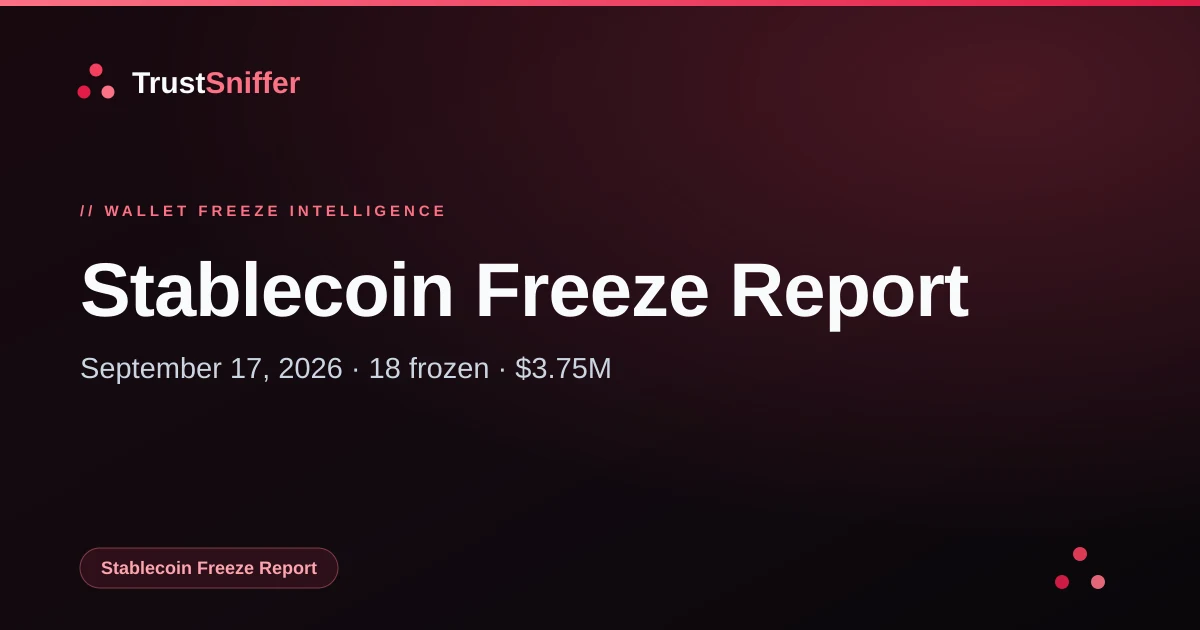
Across the networks TrustSniffer traces, issuers froze 18 addresses on September 17, 2026, removing about $3.75M in USDT and USDC from circulation. A freeze means the token issuer blacklisted the address on-chain, so the affected stablecoins can no longer be moved from it.
- Ethereum: 1 freeze, $600.1k frozen
- TRON: 17 freezes, $3.15M frozen
Largest freeze of the day
The single largest freeze on September 17, 2026 was $766.0k on TRON, on the address TJU4pJxQS7WUoYVcu5xunxgx9xDpjV28kk. Open its analysis page for the full risk verdict, exposure trace, and connected addresses.
Wallets frozen on September 17, 2026
Each frozen address is listed below with the amount frozen, linking to its dedicated TrustSniffer analysis (verdict, exposure trace, and connected wallets).
- TJU4pJxQS7WUoYVcu5xunxgx9xDpjV28kk on TRON, $766.0k frozen
- TEng6jsknbk3sM7kuvBFBbF8Arxu9JHF9L on TRON, $691.6k frozen
- 0xB4Afb244862FD73031B33CcfaC0e750a81df4e15 on Ethereum, $600.1k frozen
- TKrtGRbWm2WJsvYnQcQ56e7L6PnEfzzXvE on TRON, $489.1k frozen
- TQZkPqgKwttWc9JWzqspLR5SfyPgfsgra5 on TRON, $474.4k frozen
- TEyCoyZkvqS3F2d8m9TSn9p5kbEwt6Eb3b on TRON, $362.3k frozen
- TSA8LWo3aygJja85MEbuY8WaqBvnBoiucv on TRON, $97.1k frozen
- TXdMcuwpNwf9u3P7P1b7R3BeN7B8PEEYW6 on TRON, $60.8k frozen
- TBem3ZqyZjNKGrNms52N4zp86gkZ9Wxc3h on TRON, $60.7k frozen
- TXcVVmwa3g7wTDwzffxy9WWmpT4JBYnu6B on TRON, $53.3k frozen
- TUjr3SN8mSiVR2Q5PDLJBD64bsjRvUqkaN on TRON, $46.9k frozen
- TMrP8xHwpYMCH6ted7DVQrmfmjcvVV3azW on TRON, $20.5k frozen
- TPmSpSSpUPc9ufnj35NMUmTY9vFwRNCNvG on TRON, $13.0k frozen
- TNrPaCsPTnHsun1V3aqUubA2iXxPWGjcar on TRON, $8.6k frozen
- TH5Dq9xr78GrNym6qZqxm7U2ZMVT1EvYHq on TRON, $6.6k frozen
- THiSiDzLkBKpvu5WudCvJvsLeeK78NFk6x on TRON, $200.41 frozen
- TRpVt2XXURS7EGW7wbEADb6n2RwVAz199c on TRON, $200.00 frozen
- TAG18cZpHXRKmCBaMUyxKnHjMEWnci3DTU on TRON, $102.45 frozen
The running picture
As of September 17, 2026, TrustSniffer's freeze index counts 10,651 addresses currently frozen by stablecoin issuers across Ethereum and TRON, holding roughly $3.52B in immobilised funds, out of 11,989 addresses ever blacklisted. Browse the full picture in the live Risk Index and the sanctions directory.
How TrustSniffer tracks freezes
Every figure here comes from TrustSniffer's own on-chain monitoring: it listens directly to the USDT and USDC issuer contracts on Ethereum and TRON and records each blacklist and un-blacklist event as it happens. Bulk imports and non-issuer flags are excluded, so this report reflects real issuer freezes only. To check an address yourself, use the free wallet-risk checker; to screen a website, use the website checker.
- Stablecoin freeze
- An on-chain action in which a token issuer (such as Tether for USDT or Circle for USDC) blacklists a specific address, preventing the affected stablecoins from being moved from it. Issuers do this in response to sanctions, law-enforcement requests, or theft. A freeze can later be reversed by the issuer.
Frequently asked questions
What does it mean when a stablecoin wallet is frozen?
How can I check a specific frozen wallet?
Which networks does this report cover?
How current is this data?
Freezes are a lagging signal: by the time an issuer blacklists an address, the funds are often already flagged as high-risk. TrustSniffer's monitoring frequently identifies an address as a freeze candidate before the issuer acts, which is why screening a counterparty in advance, rather than after a freeze, is the safer habit.