Verdict
Several risk patterns were present. Do not send money or personal details until you have verified this business another way.
coreprotector.org is low-trust and potentially risky.
| What this site appears to be | Landing page for a parental-control application offering monitoring, website blocking, app usage control, GPS tracking and notification interception. Promotes tariffs, FAQ, instructions and account registration. |
|---|
Evidence status and limitations
Evidence completeness: Not recorded
- The real-world operator identity was not independently verified.
- Module-level completeness metadata is unavailable for this legacy report.
At a glance
The checks that decide most of this verdict.
| Malware engines | 2 flagged itVirusTotal | Risk |
|---|---|---|
| Google Safe Browsing | Not listedGoogle | Clear |
| Abuse reports on the host | 0% confidenceAbuseIPDB, 0 reports; shared hosting inflates reports | Clear |
| Domain age | 4 days oldMost scam domains are under a year old | Risk |
| Web archive | Archived since 20262 snapshots | Clear |
| Certificate | Encrypted connectionIssued by YR1 | Noted |
The page as captured
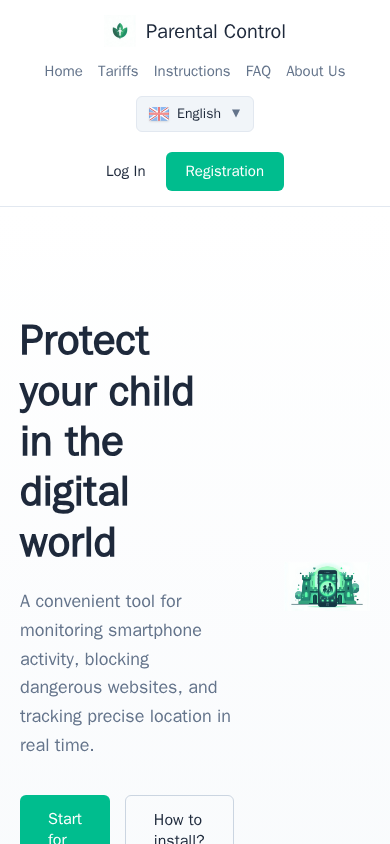
Key findings
- Automated classification: Sensitive Interaction Risk.
- Domain age: less than 1 year (registration continuity).
- Public web-archive history exists since 2026.
- At least one reputation service TrustSniffer consulted had flagged this domain at assessment time.
Full analysis
Security Alert
Fortinet, Sophos flagged this site in external intelligence checks, indicating elevated compromise/scam exposure that requires immediate caution.
This website, coreprotector.org, presents a subscription-based parental-control application intended to help parents monitor smartphone activity, block dangerous websites, control applications, track a child’s location, and receive copies of notifications from messaging and social-network applications.
Scam/Impersonation Risk
The site’s substantive pages do not display obvious brand-impersonation, phishing-form, or malicious-browser-behaviour indicators, but this does not overcome the decisive external contradiction: the domain is currently blacklisted, with malicious and suspicious detections from external security assessment sources, including Fortinet and Sophos. The combination of a newly registered domain, limited historical coverage, and active blacklist status creates a high-risk basis for sensitive interaction. The available evidence does not establish that the site is impersonating a named brand, but the operator’s identity remains unverified.
- External reputation assessment records the domain as blacklisted, with 2 malicious and 2 suspicious detections; Fortinet and Sophos are identified among the flagged vendors.
- Domain registration records show creation on 2026-10-08T09:43:32Z, with an age of 0.01 years.
- Archive records show 2 snapshots spanning 2026–2026, with 1 year tracked.
Regulatory Verification Notes
The homepage describes a commercial software service with tariff-based plans and registration, while linking to About Us, Privacy Policy, Terms of use, FAQ, instructions, and contact materials. The service claims capabilities involving precise location tracking, browsing-history access, application monitoring, and notification interception; these functions warrant clear operator identification, privacy disclosures, consent terms, and data-handling accountability. The available pages do not present a named legal entity or a claimed licence or registration number, and independent identity verification is absent. This is a material transparency and verification gap, separate from the blacklist finding. No matching third-party broker profile was identified, but that absence is not a licensing or regulatory determination.
- The homepage footer identifies the service generically as “Parental Control” and links to Privacy Policy, Terms of use, and Our contacts without establishing a named legal entity in the captured content.
- The homepage presents “Tariffs,” “Registration,” and “Log In,” indicating a paid account-based service.
- The site’s TLS certificate is DV-validated, issued by YR1, and valid until 2027-01-06T13:07:05+00:00.
- Registration records identify TUCOWS.COM, CO. as registrar.
What to Verify Next
Before any account creation, credential submission, installation, or payment, an organisation should independently establish the operator’s legal identity and confirm that the privacy and consent framework lawfully supports the stated monitoring functions. The relevant data-protection and consumer-protection requirements should be checked for the jurisdictions in which the service will be used, and official contact channels should be confirmed through an independent route rather than relying solely on the site. Until these checks are complete, activity should remain limited to non-sensitive viewing.
- The captured homepage provides no independently verified legal-entity identity or licence number to validate against an official registry.
- The service claims access to location, browsing, application, and notification data, making privacy, consent, retention, and deletion terms material verification points.
- The site requests registration and advertises paid tariffs, creating potential credential and payment exposure.
Summary Verdict
The website has a low-trust posture. Although its presentation is coherent as a parental-control SaaS offering and its observed page behaviour is comparatively limited, the active blacklist contradiction and unverified operator identity make the site unsuitable for sensitive interaction without independent validation.
Infrastructure Integrity
The site resolves directly to a likely origin rather than being shielded by a detected CDN or WAF. This provides little infrastructure-based mitigation against reputation risk; hosting infrastructure should therefore be treated as a technical delivery detail, not as evidence of legitimacy.
- Served from one resolved origin IP, 38.180.162.39, on AS51852 operated by PLI-AS - Private Layer INC, PA, in the United States.
- CDN and WAF vendors were not detected; the infrastructure assessment identifies 1 likely origin IP and 0 edge IPs.
Closing Assessment
Enterprise users should withhold credentials, payments, and installation activity until the operator, legal terms, data practices, and official contact channels have been independently validated.
Written analysis generated 2026-10-10 by the TrustSniffer Analysis Engine from the evidence in this report.
What the analysis found
4 findings contributed to this verdict, raised by external reputation, history in the web archive, hosting and network, registration and ownership.
01 External reputation
- Several malware engines flagged this domain.External reputation
rule:EXT_BLACKLIST_HIGH
02 History in the web archive
- The web archive has almost no record of this domain, which fits a site that is new.History in the web archive
rule:ARCH_PEN_YOUNG_AND_SPARSE
03 Hosting and network
- The domain was registered less than three months ago.Hosting and network
rule:DNS_NEW_DOMAIN_90D - The hosting and network setup shows a moderate level of risk indicators.Hosting and network
rule:DNS_RISK_MED
04 Registration and ownership
- The registration record withholds contact details for the operator.Registration and ownership
rule:KF_WHOIS_HIDDEN - Registration details are held behind a privacy service, so no operator is named publicly. This is common and legal, and it also means there is nobody to check.Registration and ownership
rule:KF_WHOIS_PRIVATE
Identity verification
| Status | UNVERIFIED |
|---|---|
| Identity score | 30/100 |
| Identity verification confidence | 25% |
- No on-site identity signals detected
Identity verification measures whether the site can be independently connected to a real-world brand or person. It is separate from the classification confidence.
What TrustSniffer observed
First-party facts recorded during the assessment of coreprotector.org.
- The request stayed on coreprotector.org. It was not redirected to another domain. Clear
- Registration is published under TUCOWS.COM, CO.. Clear
- DNS for this domain is served by njalla.no, across 3 name servers. Noted
- The registration is paid up to 2027-10-08. Noted
- The earliest public archive of this site is from 2026-10-08. Clear
- It is hosted on PLI-AS, from a server in US. Noted
Domain intelligence
| Registrar | TUCOWS.COM, CO. |
|---|---|
| Hosting | PLI-AS - Private Layer INC, PA |
| Country | US |
| Server IP | 38.180.162.39 |
| Name servers | 1-you.njalla.no, 2-can.njalla.in, 3-get.njalla.fo |
| CDN / edge network | Not detected |
| Resolved IP addresses | 1 |
| Edge IP addresses | 0 |
| Likely origin IP addresses | 1 |
| SSL issuer | YR1 |
| SSL expiry | 2027-01-06 |
| Domain age | 0.01 years (continuous registration) |
| Domain expiry | 2027-10-08 |
| Archive first seen | 2026-10-08 |
| Archive snapshots | 2 |
| Reputation | VirusTotal: 2 flagged | AbuseIPDB: 0% confidence, 0 reports | Google Safe Browsing: 0 matches |
About this assessment
A trust score summarises the evidence TrustSniffer could collect about coreprotector.org at assessment time. It is a starting point for your own judgement, not a guarantee: a high score means the signals were consistent with a legitimately operated site, a low or critical score means several risk patterns were present.
TrustSniffer assesses a website from the evidence it can collect at a point in time: domain registration and age, hosting and certificate, the content the site served, and third-party reputation feeds. A score is a summary of that evidence, not a guarantee and not a legal finding. There is no human rating and no user review in it. A site can change after it is assessed.