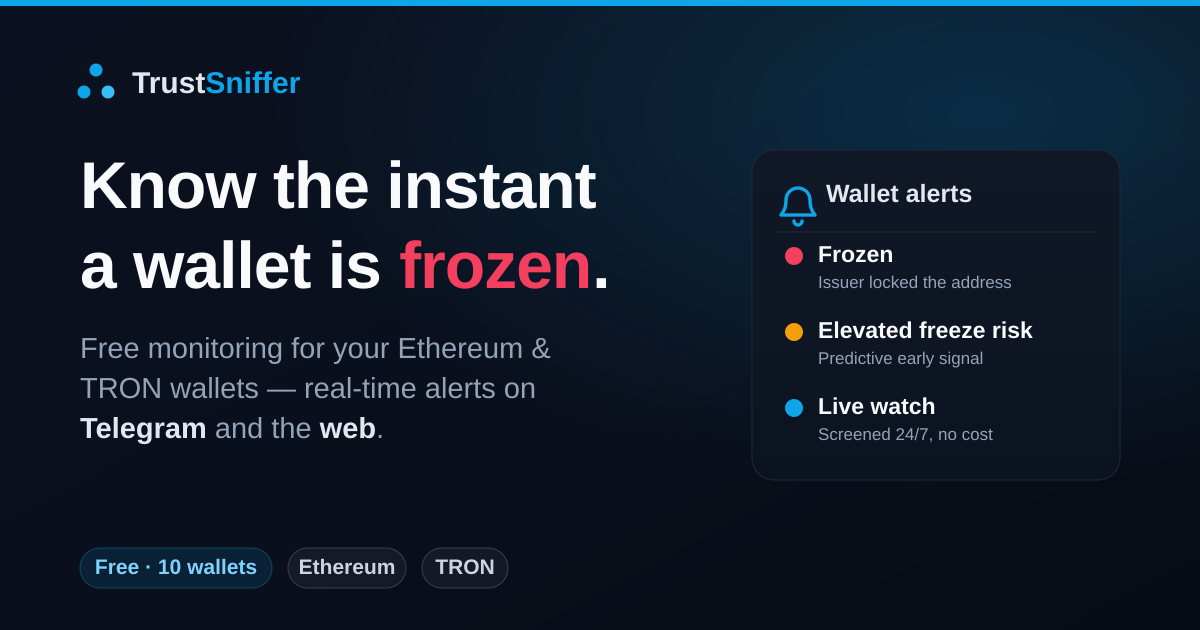
A frozen wallet is a problem you usually find out about too late
When an authorized stablecoin issuer freezes an address through a supported contract, the affected tokens cannot move while that freeze remains active. The balance remains visible on-chain, and the issuer may later reverse or update the status. Issuer freezes can relate to sanctions, legal orders, theft reports, or other issuer actions. If a counterparty becomes a freeze target, a later transfer may fail or an exchange may hold a deposit for review.
TrustSniffer records confirmed issuer events for the specific networks, assets, and issuer contracts supported by its deployed feed. That data drives the compliance channel and posts like ten USDT addresses frozen on TRON, and it rolls up into the aggregate Risk Index snapshot. Monitoring sends an alert after a relevant event is processed; timing varies by network, provider, workload, and notification channel.
- Stablecoin issuer freeze
- An on-chain action by a token issuer that blacklists a specific address at the contract level, preventing movement of the affected token at the observed time. The balance remains visible, and an authorized issuer may later reverse or update the status.
What TrustSniffer now watches for you
Add an Ethereum or TRON address to your watchlist and the engine checks it around the clock against our freeze feed and risk detectors. When its status changes, you get a push. There are three kinds:
- 🔴 Frozen: a supported issuer event records the address as frozen on-chain. Treat the address as unavailable for transfers while the observed freeze remains active, and verify the latest issuer status before acting.
- 🟢 Unbanned: a supported issuer event records that an address has been removed from the blacklist. The notification is queued after the event is processed; verify the latest issuer status before acting.
- 🟠 Elevated freeze risk: an early, predictive signal that an address looks a lot like the ones that end up frozen. It is a flag to go look, not a freeze that has already happened. Think of it as time to move counterparties off the address or hold an incoming payment.
That last one we are careful about. An elevated-risk alert means “take a closer look,” not “this wallet is guilty.” A freeze that has already landed is a fact. A risk signal is a probability, and we say so plainly instead of dressing it up as something scarier. What you do with it is your call.
Two places to use it: pick either, or both
- On Telegram: open the @TrustsnifferBot bot, tap 🔔 Monitor Wallets (or send
/monitor), and paste an address into the chat. Alerts land as push messages. No signup, and it is free from the moment you start the bot. - On the web: sign in, open Wallet Risk → Monitoring, and manage the same list there. You also get a full alert history and an optional daily email digest that rolls everything into one message.
Link your Telegram to your website account and both sides share one watchlist. Add a wallet in the bot and it shows up on the web, and the other way round. Anything you added in the bot before linking comes across on its own.
How to start monitoring a wallet
- Open the @TrustsnifferBot bot and tap 🔔 Monitor Wallets, or sign in on the web and go to Wallet Risk → Monitoring.
- Tap ➕ Add wallet and paste an Ethereum (
0x…) or TRON (T…) address. Add a label if you want one, like0xabc… my cold wallet. - Done. The address is watched around the clock, and you will hear from us on a freeze, an unban, or rising risk. One tap removes it again.
Just want a one-off answer instead of ongoing monitoring? Enter a supported Ethereum or TRON address in the wallet-risk checker for the currently available verdict, look up published addresses in the sanctions directory, or review the aggregate snapshot on the Risk Index. Screening a website instead of a wallet? That is what the website checker is for.
How it works, and what it doesn't do
Monitoring uses configured issuer-event sources for the supported Ethereum and TRON assets and contracts available to the service. The workers record supported freeze and unfreeze events after processing, while predictive signals remain indicators for review rather than confirmations. Notifications are queued for watched addresses after a relevant event or signal is processed; timing varies by network, provider, and notification channel. Risk analysis primarily uses public blockchain data. Users do not connect a wallet or sign a transaction, and TrustSniffer does not request private keys. Account and operational data are processed as described in the Privacy Policy.