Verdict
This assessment found strong scam indicators. Do not pay, sign in, or share personal details with this site.
crypto-rf1.netlify.app shows high-risk / scam indicators.
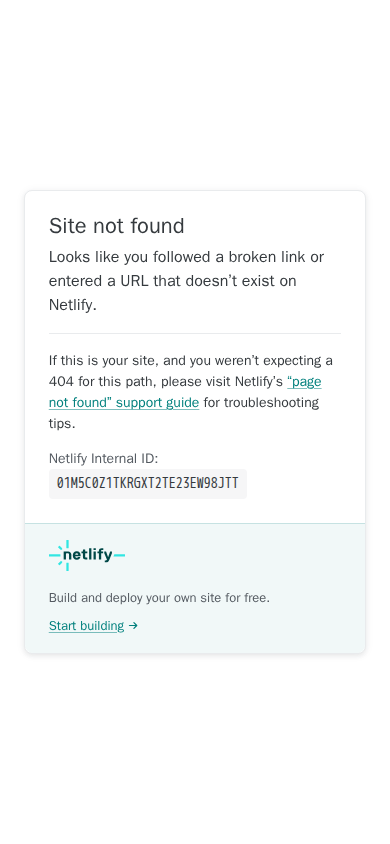
| What this site appears to be | The page is a Netlify 'Site not found' 404 error page reporting that the requested URL does not exist on Netlify. It contains no service, product, login, or commercial content, so the site's purpose and trust cannot be assessed. |
|---|
Evidence status and limitations
Evidence completeness: Not recorded
- The real-world operator identity was not independently verified.
- Module-level completeness metadata is unavailable for this legacy report.
At a glance
The checks that decide most of this verdict.
| Malware engines | 2 flagged itVirusTotal | Risk |
|---|---|---|
| Google Safe Browsing | Not listedGoogle | Clear |
| Abuse reports on the host | 1% confidenceAbuseIPDB, 4 reports; shared hosting inflates reports | Clear |
| Domain age | Not availableNo registration record was returned | Noted |
| Certificate | Encrypted connectionIssued by DigiCert Global G2 TLS RSA SHA256 2020 CA1 | Noted |
| Hosted by | AMAZON-02Server in US | Noted |
The page as captured
Key findings
- Automated classification: Sensitive Interaction Risk.
- At least one reputation service TrustSniffer consulted had flagged this domain at assessment time.
- The operator behind the site could not be independently connected to a real-world brand or person.
Full analysis
Overview
This website is a crypto-themed subdomain on the shared Netlify hosting platform. It currently serves only the platform's generic "Site not found" error page, which says the requested address does not exist and invites visitors to build their own site. The visitor sees no product, service, login, pricing or company information, so no business model or operator purpose can be established from the content.
Scam/Impersonation Risk: Contradictory signals are present, and they carry the assessment. Multi-engine reputation scanning returned two malicious detections and one suspicious detection against the domain, and an external blacklist also lists it. This is a confirmed blacklist hit, and the infrastructure cannot offset it. The page analysis also flagged a close lookalike of the hosting platform's own brand, which is a suspected-impersonation indicator. It is not a confirmed impersonation, and the visible content makes no brand claims. The behavioural sandbox adds a mismatch. The homepage shows no forms or login, yet all three sandbox runs detected hidden form elements, including password-type fields, and very large page changes after interaction. That is a concerning pattern for a page that displays only a 404 message. It is consistent with a placeholder that can be swapped for credential-harvesting content, although the runs found no wallet-connection, clipboard-hijack or cloaking behaviour. Four abuse reports exist against one of the shared edge addresses. They are attributed to shared provider infrastructure, so they are weak evidence about this specific site. No conflicting legal identities were observed, because the site publishes no identity content. Evidence:
Regulatory Verification Notes: The site presents no terms, privacy policy, about page, company name, licence or registration number, so on-page disclosure cannot be assessed and the real-world operator is unverified. The TLS certificate is issued to the hosting platform (Netlify, Inc), not to any independent operator. It therefore proves nothing about who controls this subdomain. The broker-reputation lookup returned no match, and the site claims no regulated activity. No licensing claim exists to validate, and the absence of one is a verification gap, not evidence of wrongdoing on its own. Evidence:
What to Verify Next: Anyone who received this address through an advertisement, message or referral should confirm the intended destination through an independent route, such as a publicly listed official website or a known contact, before any further interaction. The sender should be asked which legal entity operates the service, and any claimed licence should be checked directly with the relevant registry. Because the page is an empty placeholder with hidden form capability, a later change in its content should be treated as a new, unreviewed site. It should not be assumed to be the same benign page. Evidence:
Summary Verdict: The overall posture is clearly elevated risk. Confirmed blacklist and malicious detections, together with hidden credential-capable form behaviour on an otherwise empty page, outweigh the valid transport encryption and stable page responses. The operator's identity is unverified, and the available evidence gives no basis for treating the site as legitimate.
Infrastructure Integrity: The site sits behind an Amazon-based CDN/WAF layer, and all four observed addresses are edge servers, with the origin server not observable. The protective infrastructure and the valid, known-issuer certificate are mitigating factors only. They do not establish legitimacy, and they cannot offset the external threat detections. Edge-only visibility also prevents independent hosting verification and can mask rapid content swaps.
Closing Assessment: Passive, read-only viewing is the most this site warrants. Login, entering credentials, wallet interactions and any financial or payment activity should be avoided until the operator's identity is independently established and the current threat detections have been cleared.
- Homepage: the reputation scan returned two malicious and one suspicious detection, and the external blacklist also lists the domain.
- Homepage sandbox: hidden forms, including password fields, were detected in all three runs, with about 4,130 DOM mutations after interaction, while the visible page shows no form.
- Page analysis: the domain was flagged as a strong lookalike of the hosting platform's brand, with no visible content to confirm or refute impersonation.
- Hosting network: four abuse reports were logged against a shared Amazon edge IPv6 address, attributed to shared infrastructure.
- Homepage: the page contains only the platform's 404 message, a support-guide reference and a generic "Start building" prompt, with no legal or identity content.
- TLS: certificate issued by DigiCert Global G2 TLS RSA SHA256 2020 CA1, OV validation, subject organisation Netlify, Inc, valid to 2027-03-19.
- Hosting: served from AS16509 (AMAZON-02 - Amazon.com, Inc., US).
- Homepage: no operator, product or contact information exists to verify against.
- Sandbox: hidden password-type fields are present on a page that visibly offers no login.
- Reputation: the current blacklist and malicious detections should be re-checked before any future revisit.
Written analysis generated 2026-10-20 by the TrustSniffer Analysis Engine from the evidence in this report.
What the analysis found
3 findings contributed to this verdict, raised by external reputation, behaviour in a sandbox, page content.
01 External reputation
- Several malware engines flagged this domain.External reputation
rule:EXT_BLACKLIST_HIGH
02 Behaviour in a sandbox
- The page contained a form a visitor cannot see.Behaviour in a sandbox
rule:BEHAV_HIDDEN_FORMS - The page replaced a large part of its own content after loading.Behaviour in a sandbox
rule:BEHAV_DOM_CHANGE_HIGH - The page rewrote itself after it was interacted with, so what a visitor first sees is not what they end up on.Behaviour in a sandbox
rule:BEHAV_DOM_DIFF_AFTER_INTERACTION
03 Page content
- The page appears to present itself as a known brand it is not verified to belong to.Page content
rule:PAGE_BRAND_SUSPECTED
Signals weighed against the site
- AbuseIPDB: 4 reports on hosting IP 2a05:d014:58f:6200::258 (Amazon Data Services Ireland Ltd, Content Delivery Network), 1% confidence. The reports are attributed to shared infrastructure, not specifically to this website.
Identity verification
| Status | UNVERIFIED |
|---|---|
| Identity score | 30/100 |
| Identity verification confidence | 50% |
- No on-site identity signals detected
Identity verification measures whether the site can be independently connected to a real-world brand or person. It is separate from the classification confidence.
What TrustSniffer observed
First-party facts recorded during the assessment of crypto-rf1.netlify.app.
- The request stayed on crypto-rf1.netlify.app. It was not redirected to another domain. Clear
- It is hosted on AMAZON-02, from a server in US. Noted
Domain intelligence
| Registrar | Not available |
|---|---|
| Hosting | AMAZON-02 - Amazon.com, Inc., US |
| Country | US |
| Server IP | 2a05:d014:58f:6200::258 |
| Name servers | Not available |
| CDN / edge network | Detected (aws) |
| Resolved IP addresses | 4 |
| Edge IP addresses | 4 |
| Likely origin IP addresses | 0 |
| SSL issuer | DigiCert Global G2 TLS RSA SHA256 2020 CA1 |
| SSL expiry | 2027-03-19 |
| Domain age | Not available (no registration date was returned) |
| Domain expiry | Not available |
| Archive first seen | Not available |
| Archive snapshots | Not counted (archive lookup incomplete) |
| Reputation | VirusTotal: 2 flagged | AbuseIPDB: 1% confidence, 4 reports | Google Safe Browsing: 0 matches |
About this assessment
A trust score summarises the evidence TrustSniffer could collect about crypto-rf1.netlify.app at assessment time. It is a starting point for your own judgement, not a guarantee: a high score means the signals were consistent with a legitimately operated site, a low or critical score means several risk patterns were present.
TrustSniffer assesses a website from the evidence it can collect at a point in time: domain registration and age, hosting and certificate, the content the site served, and third-party reputation feeds. A score is a summary of that evidence, not a guarantee and not a legal finding. There is no human rating and no user review in it. A site can change after it is assessed.